
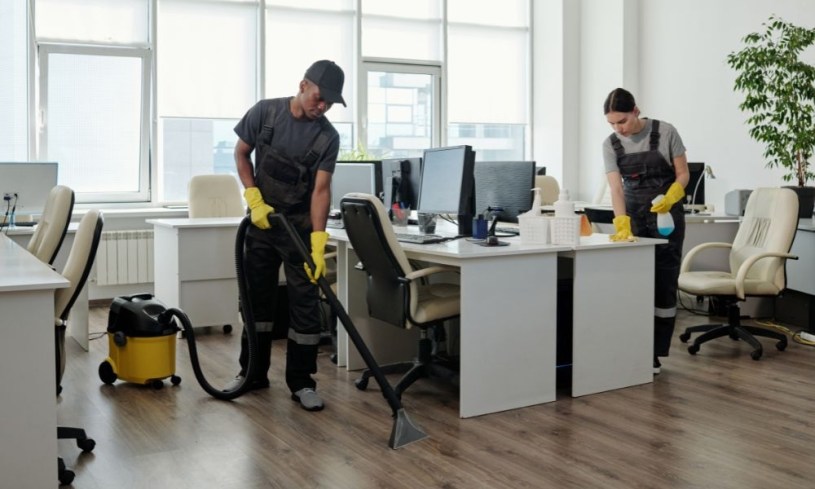
Office cleaning is the facilities service most often bought on price and most often regretted for the same reason. The work is invisible when done well and obvious when it is not, which makes it hard to evaluate until standards have already slipped. This guide covers how professional office cleaning services singapore businesses engage should be specified, procured and managed so the result holds beyond the first few months.
Start by Defining the Scope
Vague briefs produce incomparable quotations and inevitable disputes. A workable specification lists the areas covered with approximate square metres, the tasks performed at each frequency, and who supplies consumables. Daily tasks typically cover waste removal, washroom servicing, pantry cleaning, vacuuming of traffic areas and desk surface wiping. Weekly tasks might include full vacuuming, glass partitions and detailed washroom work. Periodic tasks cover carpet cleaning, high-level dusting, upholstery and window work. Writing this down is the single most useful hour in the whole process.
Working Out the Right Frequency
Frequency should follow occupancy rather than convention. A densely occupied floor with a busy pantry and heavy visitor traffic needs daily attendance. A hybrid workplace at forty per cent occupancy may be adequately served three days a week, with the saving redirected into more frequent periodic work. Washrooms are the exception they need daily servicing regardless of headcount, because they are where standards are judged and where complaints originate.
Day Cleaning Versus Out of Hours
Out-of-hours cleaning is traditional and avoids disturbing occupants, but nobody sees the work and issues surface the following morning when the crew has gone. Day cleaning costs slightly more, is visible, and allows problems to be addressed immediately, though it requires cleaners who work discreetly around staff. Many organisations now run a hybrid: a light day presence for washrooms, pantries and reactive issues, with the main clean out of hours. Deciding this before tendering affects pricing significantly.
What Distinguishes Providers
Beyond price, the differentiators are staffing, supervision and systems. Ask whether cleaners are directly employed or subcontracted, since employed staff learn a site and stay longer. Ask what supervision exists and how often a supervisor physically attends. Ask about cover arrangements for absence, which is where service most commonly fails. Ask about training, particularly for chemical handling and any specialist areas. Providers who also deliver office carpet cleaning services and other periodic work can cover the whole requirement under one agreement, which simplifies scheduling and accountability.
Understanding the Price
Cleaning is a labour business, so the price largely reflects hours on site multiplied by a labour rate, plus consumables, equipment and margin. A quotation substantially below the others usually means fewer hours, not greater efficiency and fewer hours means tasks quietly dropped. Asking each provider to state the weekly hours and headcount they have allowed makes the comparison far more meaningful than the monthly figure alone, and it exposes where the cheap quotation has cut.
Consumables and Equipment
Establish who supplies what. Some contracts include hand soap, paper products and bin liners; others charge them separately at a markup. Consumption in washrooms is significant and it is worth knowing whether you are buying at cost or at a margin. On equipment, confirm that vacuum machines have working filtration, since a poorly filtered vacuum redistributes fine dust rather than removing it a common and invisible cause of persistent complaints about air quality.
Monitoring Standards
Standards drift unless someone measures them. A simple monthly inspection against the specification, scored and shared with the provider, keeps performance visible and gives both sides something concrete to discuss. Complaint logs are useful but lagging — by the time occupants report a problem, it has usually persisted for a while. A short quarterly meeting to review scores, complaints and any changes in occupancy keeps the arrangement healthy without becoming a burden.
Hygiene Beyond Appearance
Cleanliness and hygiene are related but not identical. Frequently touched surfaces door handles, lift buttons, shared equipment, pantry taps carry contamination regardless of how tidy an area looks. Specifying disinfection frequency for these separately from general cleaning addresses the health outcome directly. Guidance on the types of commercial cleaning services available sets out where routine cleaning ends and specialist hygiene work begins.
Getting Comparable Quotations
Issue the same written brief to every provider: floor areas, occupancy, task list by frequency, access hours, consumables responsibility and any special requirements. Ask each to state allowed hours and headcount. Quotations returned against a common brief can be compared directly; those returned against individual interpretations cannot. This step takes little time and prevents the most common procurement outcome, which is selecting a low bid that was priced for a smaller scope.
Making It Last
The arrangements that work over years share a few features: a written specification both parties refer to, stable directly employed staff, real supervision, a monitoring routine and a periodic review. None of it is complicated. What it requires is treating cleaning as a managed service rather than as a commodity bought once and forgotten which is the difference between a workplace that stays presentable and one that gradually stops being so.

